Wednesday, January 30, 2008

Colombia ratifies the Comprehensive Nuclear Test Ban Treaty

Earthtimes reports this morning that Colombia has ratified the Comprehensive Nuclear Test Ban Treaty (CTBT). The Preparatory Commission for the Nuclear-Test-Ban Treaty Organization (CTBTO) indicates Colombia’s date of ratification as January 29, 2008. Colombia’s ratification brings the total number of ratifications of the Treaty to 144 of 178 that have signed the CTBT.

Following a number of ratifications by smaller states this year, Colombia’s action significantly advances the CTBT toward entry into force as Colombia is one of 44 “Annex 2” states whose ratification is a prerequisite for entry into force.

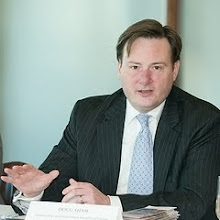
CTBTO Executive Secretary Tibor Tóth remarked that:
“This is an extremely important event…Colombia's ratification creates a tipping
point and brings the Treaty one step closer to taking effect. We welcome
Colombia's move and expect other ratifications from Annex 2 countries to follow
suit.”
This bold action by Colombia demonstrates the capacity of all states to contribute to prudent, effective, and verified progress toward a world free of nuclear weapons. Ambassador Rosso Jose Serrano Cadena, Permanent Representative of the Republic of Colombia to the CTBTO said that:

Of the 44 “Annex 2” states only North Korea, India, and Pakistan have not yet signed the CTBT and China, Egypt, Indonesia, Iran, Israel, and the United States have not yet ratified.
“All peace loving countries must ratify the CTBT…We are sure that this will
happen. Also the Latin American and Caribbean region are now close to becoming a
complete CTBT continent.”
The ratification of Colombia leaves only Cuba, Dominica, Saint Vincent and the Grenadines, and Trinidad and Tobago not having signed the CTBT and Guatemala not having ratified Treaty among the states parties to the Treaty of Tlatelolco, establishing the Nuclear Weapon Free Zone in Latin America and the Caribbean.

Monday, January 28, 2008

Test ban advances toward universality

Malaysia ratified the Comprehensive Test Ban Treaty (CTBT) on January 17, 2008, bringing the total number of ratifications to 143. Ambassador Tibor Tóth, Executive Secretary of the Preparatory Commission for the Comprehensive Nuclear-Test Ban Organization (CTBTO) reacted, releasing a statement which read, in part:

“This is very important internationally, but also regionally: Malaysia’s
ratification tips the balance in the Association of Southeast Asian Nations
(ASEAN) where 6 out of 10 countries now have ratified the Treaty.”

The CTBTO points out that, among ASEAN states:

“Cambodia, the Lao People’s Democratic Republic, Malaysia, the Philippines,
Singapore and Vietnam have now ratified the CTBT, whereas Brunei Darussalam,
Indonesia, Myanmar and Thailand have yet to ratify it.”

In other CTBT news, loyal readers will recall that on November 27, 2007, in a post on the occasion of the ratification of the CTBT by the Bahamas, we wrote “Barbados, the eyes of the world are now upon you!” We are pleased to report that Barbados signed the CTBT on January 14, 2008.

In our emerging tradition of blind luck in picking states about to sign or ratify the CTBT, we turn to Trinidad and Tobago to play its historic role in globalizing this important instrument for nuclear disarmament.

Wednesday, January 16, 2008

Diverse Coalition Launches Campaign to Stop U.S. Nuclear Deal with India

Twenty-three organizations yesterday launched a coalition to stop the Bush Administration’s proposed nuclear trade agreement with India. The proposed agreement would exempt that nuclear-armed nation from longstanding U.S. and international restrictions on states that do not meet global standards to prevent the spread of nuclear weapons.

The Campaign for Responsibility in Nuclear Trade believes the agreement would: dangerously weaken nonproliferation efforts and embolden countries like Iran and North Korea to pursue the development of nuclear weapons; further destabilize South Asia and Pakistan in particular; and violate or weaken international and U.S. laws, including the Hyde Act, which Congress passed in 2006 to provide a framework for the bilateral U.S.-Indian nuclear cooperation agreement.

“When Congress takes a close look at the Bush Administration’s proposed agreement, it will find a dangerous, unprecedented deal,” said John Isaacs of the Council for a Livable World. “The proposal undermines over 30 years of nonproliferation policy, will increase India’s capability to produce nuclear weapons and its stockpile of nuclear weapons-material, and sends the wrong message to Pakistan during a time of crisis in that country. We feel confident that, under the Congressional microscope, the many flaws of this deal will be exposed, and it will ultimately be rejected for the sake of preserving national security and global stability.”

The U.S.-Indian bilateral nuclear cooperation agreement would allow the transfer of U.S. nuclear technology and material to India. However, it fails to hold India to the same responsible nonproliferation and disarmament rules that are required of advanced nuclear states. The deal will increase India’s nuclear weapons production capability, exacerbate a nuclear arms race in the region, undermine international non-proliferation norms, and encourage the creation of large nuclear material stockpiles. Its contribution to meeting India’s growing energy needs has been greatly exaggerated and it would create economic opportunities for foreign nuclear industries without any guarantees for U.S. businesses.

The pact must win approval from the U.S. Congress, which changed U.S. law in December 2006 to allow negotiation of the agreement, under several conditions that have not been met in the final language of the agreement. Those conditions include a new agreement with the International Atomic Energy Agency for safeguarding Indian power reactors and changes to the international guidelines of the 45-member Nuclear Suppliers Group, which currently restrict trade with India.

Members of the Campaign are working to educate the U.S. Congress and public about the dangers of the deal, and are working with experts and organizations in two-dozen countries to inform deliberation over the deal within Nuclear Suppliers Group and its member state governments.

The new coalition’s partners include: Council for a Livable World, Arms Control Association, Federation of American Scientists, Physicians for Social Responsibility, Presbyterian Church (U.S.A.) Washington office, United Methodist Church - General Board of Church and Society, Friends Committee on National Legislation, Institute for Religion and Public Policy, Union of Concerned Scientists, Center for Arms Control and Non-Proliferation, All Souls Nuclear Disarmament Task Force, British American Security Information Council, Women’s Action for New Directions, Americans for Democratic Action, Peace Action, Peace Action West, Arms Control Advocacy Collaborative, Beyond Nuclear, Bipartisan Security Group, Citizens for Global Solutions, Maryknoll Office for Global Concerns, Nuclear Age Peace Foundation and Nuclear Information Resource Information Service.

Advisors to the coalition include Ambassador Robert Grey (Ret.), former U.S. Representative to the Conference on Disarmament and Director of the Bipartisan Security Group; Dr. Leonard Weiss, former staff director of the U.S. Senate Subcommittee on Energy and Nuclear Proliferation and the Committee on Governmental Affairs; Dr. Robert G. Gard, Jr., Lt. Gen., U.S. Army (Ret.), Senior Military Fellow, Center for Arms Control and Non-Proliferation; Subrata Ghoshroy, Director, Promoting Nuclear Stability in South Asia Project, Massachusetts Institute of Technology; and Dr. Christopher Paine, Nuclear Program Director, Natural Resources Defense Council.

The Campaign’s website is www.responsiblenucleartrade.com.

About the Campaign for Responsibility in Nuclear Trade
The Campaign for Responsibility in Nuclear Trade, a partnership project of 23 nuclear arms control, non-proliferation, environmental and consumer protection organizations, opposes the July 2005 proposal for civil nuclear cooperation with India and the additional U.S. concessions made to India as a result of subsequent negotiations because they pose far-reaching and adverse implications for U.S. and international security, global nuclear non-proliferation efforts, human life and health, and the environment. More information about the campaign can be found at www.responsiblenucleartrade.com.

Tuesday, December 25, 2007

Another reason for a toast on Dec. 31

Before leaving town last week, Congress passed a big appropriations bill which President Bush is expected to sign this week.

The appropriations bill provides funding through Sept. 30, 2008. It contains much good news for nuclear arms control and nuclear non-proliferation, due in large part to Reps. Visclosky (D-IN) and Hobson (R-OH), as well as Sen. Dorgan (D-ND), who lead the Energy & Water Appropriations Subcommittees.

The FY 2008 Omnibus Appropriations Bill made significant contributions to the goals of effective nuclear non-proliferation by increasing funding for almost all nuclear non-proliferation programs, while cutting funding for controversial programs that undermine and jeopardize those goals.

Here are the best parts:

-Funding for the Reliable Replacement Warhead (that proposes to design and develop a new type of nuclear weapon) was zeroed out ($0 for RRW!).

-Funding for nuclear spent fuel reprocessing (which separates out weapons-usable material, or material that can be easily processed to make it nuclear weapon-usable, from nuclear waste) was cut by more than $200 million.

-Funding for many of the important threat reduction programs that secure nuclear weapon-usable material in the former Soviet Union states and other countries, and for nuclear non-proliferation organizations, were increased by $340 million dollars.

-Funding for other nuclear non-proliferation programs were increased by almost $270 million (including non-proliferation and international security program, non-proliferation and verification, research and development program, U.S. contribution to create an international fuel bank, and CTBTO and IAEA funding).

-The bill requires a Nuclear Weapons Strategy for the 21st Century to be done in consultation with federal agencies and independent, non-government organizations.

-The bill requires the President to submit to Congress in 2008 a Comprehensive Nuclear Threat Reduction and Security Plan to secure nuclear weapons and nuclear weapons-usable material by 2012.

For many more details, see the analysis and summary of the appropriations bill I prepared for the Center for Arms Control and Non-Proliferation.

Cheers and happy holidays!

Tuesday, December 11, 2007

Pope Benedict XVI supports a world free of nuclear weapons

The AP reports that Renato Cardinal Martino presented the Message of His Holiness Pope Benedict XVI for the celebration of the World Day of Peace on January 1, 2008. On the topic of nuclear weapons, the Holy Father advises:
“At a time when the process of nuclear non-proliferation is at a stand-still, I feel bound to entreat those in authority to resume with greater determination negotiations for a progressive and mutually agreed dismantling of existing nuclear weapons. In renewing this appeal, I know that I am echoing the desire of all those concerned for the future of humanity.”
Click here to read the full message.

Thursday, December 6, 2007

Remembering George Kuzmycz

Nukes on a Blog remembers the contribution of the late George Kuzmycz to the prevention of the proliferation of nuclear weapons on the tenth anniversary of his untimely passing.

During the last few years of his life, George led U.S. Department of Energy efforts to secure weapons usable nuclear materials in Ukraine from theft or diversion.

George’s commitment to his native Ukraine and to nonproliferation are memorialized in the ongoing work of the George Kuzmycz Training Center for Physical Protection, Control and Accounting of Nuclear Material (English translation).

George’s life reminds us that the dangers posed by nuclear weapons and nuclear proliferation result from human choices and that it is possible, as George did, for each of us to take on more than our share of responsibility for responding to these dangers.

Monday, December 3, 2007

A General, a group of visionary students, the Quakers, and 30 national organizations oppose new nuclear weapons

Lieutenant General Robert Gard (USA-ret.), Nukes on a Blog’s own Leonor Tomero, and the redoubtable researcher Achraf Farraj published an article in Friday’s Daily Californian encouraging University of California students and faculty to question the University’s involvement in the development of the so-called Reliable Replacement Warhead (RRW):
“The University of California manages Lawrence Livermore National Laboratory, a facility leading the development of the so-called Reliable Replacement Warhead, the first new hydrogen bomb designed by the United States in 20 years. Students and faculty at the University of California have a unique role to play in actively questioning this misguided U.S. nuclear weapons policy and UC’s involvement in its implementation.”
The authors conclude that:
“There are many problems facing the United States today, but the viability of its nuclear deterrent is not one of them. Building new nuclear weapons will not make us safer. It will do nothing to deter terrorists, it will not protect our soldiers in Iraq and Afghanistan and it will not improve our relationships with other countries. It will only undermine efforts to prevent the spread of nuclear weapons, extend outdated Cold War-era thinking, shirk our international commitments, waste a lot of money and threaten our long-term security.”
University of California students have already taken up this work, most notably through the formation of the UC Student DOE Laboratory Oversight Committee. Loyal readers will recall a few more ideas about how universities can respond to the danger posed by nuclear weapons. For regular updates on the RRW program and how it related to the University of California, check out the facebook group (at www.facebook.com) "Why is the University of California building a new H bomb?"

Also last week, the Friends Committee on National Legislation organized a letter submitted to Senator Byron Dorgan who chairs the Energy and Water Development Subcommittee of the Senate Appropriations Committee urging him to
“delete all funding for the Reliable Replacement Warhead (RRW) from the upcoming omnibus appropriations bill.”
The letter, signed by leaders of thirty national organizations (including the Council for a Livable World and Physicians for Social Responsibility), argued that:
“If Congress approves funding for the Energy Department to proceed with research and possible development of RRW, many in the international community will interpret this as another sign that the U.S. is walking away from its nonproliferation obligations, including Article VI of the nuclear Non-Proliferation Treaty. The 118 countries of the Non-Aligned Movement have already cited development of RRW as contradictory to nuclear disarmament agreements signed by the United States. RRW will complicate efforts to win international support to bolster the beleaguered NPT system.”
The future of the U.S. nuclear arsenal is an issue of great importance to all Americans and the success or failure of the emerging movement for a world free of nuclear weapons bears directly on the long-term viability of human civilization. We applaud these and other attempts by concerned citizens to precipitate a national debate worthy of this deadly serious policy choice.