Remarks Delivered by
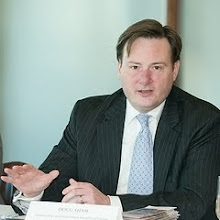
Douglas B. Shaw
at the U.S. Department of Energy’s
Next Generation Safeguards Initiative Human Capital Development Conference
hosted by Los Alamos National Laboratory in cooperation with
Texas Agricultural and Mechanical University
Santa Fe, New Mexico
August 10, 2009
This spring, the celebrated deterrence theorist and historian of nuclear strategy Sir Lawrence Freedman visited the Elliott School and observed an imperative for higher education to respond to a “lost generation” of nuclear weapons specialists. Others have made similar observations.
In explaining his decision to host a July 2009 conference on “Waging Deterrence in the 21st Century,” General Kevin Chilton, commander of the U.S. Strategic Command, observed “I think we have allowed an entire generation to skip class, as it were, on the subject of strategic deterrence.”
In introducing the 2002 United Nations Study on Disarmament and Non-Proliferation Education, then Secretary-General Kofi Annan found it “striking for someone of my generation to think that an entire new generation of human beings is coming to maturity without an ever present terror of nuclear catastrophe. Yet it is so, and that is for the better. The downside, however, is ignorance of the real dangers that do exist, especially the legacy of nuclear weapons inherited from the last century. Moreover, the companion of ignorance is complacency: what we know little about, we care little to do anything about.”
Our host, Dr. James Doyle, wrote in his paper “Nuclear Security as a Multidisciplinary Field of Study,” that “[o]ver the next five years, some 50 percent of the IAEA’s top inspectors are expected to retire, taking with them key institutional knowledge and technical skills.” The challenge before us is as immediate and global as it is important.
I am grateful to Jim and Los Alamos National Laboratories for hosting this meeting, the National Nuclear Security Administration’s Next Generation Safeguards Initiative for making it possible, and to all of you for constituting such an exciting program. I am humbled to be included, but assure you that my students this fall will benefit substantially from this discussion.
Jim has asked me to address faculty goals and resource needs for nonproliferation and safeguards education. I will approach this task by reflecting on the four basic goals Jim identified in his paper. First, the interdisciplinary character of nonproliferation; second, the need to confront real-world problems; third, empowering students to balance the costs and benefits of nuclear technology; and finally, the incorporation of experiential learning. These are just a few ideas and my only pride in suggesting them is that the audience assembled to receive them is so capable of improving upon them.
I. Interdisciplinary Foundations
The first basic goal of nonproliferation education that Jim identifies is that graduate and undergraduate programs in nuclear security should “provide the necessary fundamentals in nuclear security science from across the physical and social sciences.” This observation echoes the observation of the United Nations study I mentioned earlier that “new formal and informal curricula should…adopt a multidisciplinary approach.”
[1]This is a huge task. Jim identifies more than a dozen disciplines as immediately relevant to nuclear security. Most colleges and universities are organized by disciplinary departments effectively stove-piping faculty credentialed hired, socialized, promoted, tenured, and evaluated in these disciplinary departments away from interdisciplinary collaboration. While there are countervailing initiatives and even trends, interdisciplinary work can be hazardous to the career prospects of many young faculty members.
Some institutions will find the organization of interdisciplinary programs easier than others, but from a vantage point inside the Elliott School of International Affairs, an explicitly interdisciplinary institution organically focused on responding to global human problems with policy engagement built into its mission on an equal footing with research and teaching, I can say with confidence that this will always imply tensions.
Managing these tensions and creating a strong foundation for nonproliferation education in several disciplines will require incentives to draw more faculty into this area of teaching. There are many ways to do this, three stand out to me as particularly achievable. Funding research on nonproliferation-related topics that engages the current methodological and scholarly debates in each relevant discipline could attract faculty to greater practical nonproliferation expertise while advantaging those who engage in scholarship on these topics in their pursuit of tenure and recognition within their disciplines. Similarly, creating faculty sabbatical opportunities with careful attention to their professional growth requirements could make it easier for more scholars to focus more energy on these topics. Finally, higher education environments vary considerably. Creating institution-specific partnerships would have the benefit of engaging the leadership of these colleges and universities to encourage their faculty with the spectrum of specific tools at their disposal.
II. Real-world Problems
Jim’s second basic goal is to “provide an understanding of the unique challenges that arise when applying these fundamentals to real-world problems.”
We may benefit here from a parallel effort undertaken by the Director of Columbia University’s Earth Institute, Professor Jeffrey Sachs in teaching sustainable development. In a recent op-ed co-authored by Sachs and Millennium Promise CEO John McArthur in the Chronicle of Higher Education, the authors describe the problems of sustainable development as:
“complex and interconnected, spilling across academic disciplines and often across national borders. Solutions will require theoretical knowledge and practical problem-solving skills, including the capacity to build and lead teams drawn from a variety of disciplines. This will require leaders who can cross boundaries of science, policy, geography, theory, and practice.”[2]
Sound familiar?
Their response at the Earth Institute, modeled on the Flexner Report of 1910 that “revolutionized and standardized systematic training for medical doctors in North America” undertook to assess current sustainable development education and make recommendations for a transformation of professional education – specifically, a new form of degree program they call the “master’s in development practice” to provide a grounding in several disciplines but also substantial “clinical” training to educate students to build interdisciplinary teams indifferent to their geographic location or dispersion responding to undertake case studies and field work. This effort, underwritten by a $15 million grant from the John D. and Catherine T. MacArthur Foundation aims at nothing less than the global transformation of an emerging profession.
Needless to say, $15 million is important among my suggestions for resources needed to stimulate new teaching for nonproliferation, but I suspect this effort has more to teach us about the integrative work of connecting our disciplinary perspectives into the formation of future nuclear security professionals. The Next Generation Safeguards Initiative could convene a discussion to define the future professions necessary for nuclear security and seed the establishment of model professional degree programs to support them, support a network of schools offering these types of programs, and regularly convene meetings like this one to establish a network of faculty teaching on nonproliferation and alumni who have received this training, perhaps forming the core of new professional organizations. These efforts should leverage other networks already under development, such as the United Nations annual reporting on Nonproliferation and Disarmament Education, the efforts of the International Association of University Presidents, and the work of pioneers in this field, particularly including the James Martin Center for Nonproliferation Studies.
III. Understanding the Need to Balance Risks and Benefits
Jim’s third basic goal is developing “understanding of the need to balance the risks posed by nuclear technologies with their benefits.”
Nuclear technology has complex societal effects. The human tendency toward war made nuclear weapons inevitable, but nuclear weapons are thought to control this tendency, assuming human beings can control these weapons in the context of our fallibility. We identify nuclear terrorism and proliferation as the greatest threats to our security but make only modest investments in response.
The question of peaceful uses of nuclear technology is interwoven with the question of nuclear proliferation and terrorism and adds its own additional complexity. At its beginning, nuclear energy promised power too cheap to meter. Decades later, we still don’t know what it costs. National governments necessarily have a role to play in anything that contains so much promise and danger, but what that role should be is intensely contested.
What I take from this goal is that there are immediate and significant moral implications for our work as educators. Our students will live with challenges we can’t imagine today. For example, Rose Gottemoeller, who now serves as the Assistant Secretary of State for Verification, Compliance and Implementation tasked by President Obama to negotiate a new nuclear arms reduction agreement with Russia; Adam Scheinman, who played a leadership role in the established of the Next Generation Safeguards Initiative and now serves as the director for nonproliferation at the National Security Council; and Thomas Troyano, who leads the Office of Treaty Compliance in the Pentagon all studied security policy at the Elliott School in the 1980s. No case studies or fieldwork designed at that time could be perfectly relevant to today’s challenges. We need to open our students’ imaginations beyond today’s challenges. This is hard, but as scholars committed to revealing truth, our work is not value neutral. As Georgetown University President Jack DeGioia observes, “the truth makes demands of us.”
He approaches this problem through the creation of flagship courses, one on human rights and another on ethics and global development designed to get students talking about these value-laden topics outside the classroom by making them more visible and widening student interest.
High-profile speakers – like the Secretary of Energy or the White House Science Advisor – touring campuses would raise student awareness considerably. Awards and essay competitions – like the one that got Hans Blix interested in the field – have impacts that extend through time and beyond their winners. These kind of efforts hold promise for shifting the curve of awareness up across entire student bodies and widening the conversation to include ethical and political considerations in the uncontrolled real world with information and theoretical frameworks reliably supplied in the classroom.
IV. Experiential Learning
Jim’s last basic goal, to “include the opportunity for hands-on training (internships, lab experiments, [and] simulation exercises)” also aligns with the UN Study’s call for participatory learning, in particular role-playing and simulations.
[3]One valuable step would be technology and travel support to help connect classes at different institutions in simulations – simulations require a lot of energy from both students and faculty, the structure and added momentum of participants from other departments or institutions can reinforce these efforts.
Exhibits, models, and mock-ups – when students touch unusual objects that relate to unfamiliar subjects, they can better visualize the settings and processes relevant to these subjects and they feel more connected and attracted to the topic area. Traveling exhibits and permanent collections in cities with several universities could make a lasting impression on students.
Guest speakers with real world experience – nonproliferation and safeguards are extraordinarily complex topics and many key documents are dry and difficult to teach – the Additional Protocol is one example of critical document that is difficult to teach because it is obtuse and boring to read. Sharing lived experiences can contribute to deeper student engagement.
Multimedia – different people learn differently; unfortunately individual faculty have limited capacity to develop diverse teaching resources themselves. I recall when I was at the Department of Energy I had the opportunity to use a CD-ROM training program called Nuclear Material Control and Accounting 101. This particular resource might not be appropriate for general distribution, but something similar could be produced and even made available online and would provide a multi-media learning opportunity for my students that I could not produce on my own.
These have been just a few examples: encouraging multidisciplinary teaching by creating career incentives for faculty, seeding transformational programs and seeking a vision of emerging professions and creating a global network to engage real-world problems, widening campus conversations about the risks and benefits of nuclear technology, and making tailored multimedia resources, guest speakers with vivid real-world experience, and networking technology to drive more exciting simulations available to faculty teaching on nonproliferation and safeguards. I look forward to learning from you what other resources would be useful and how we might work together to assemble them. Thank you.
[1] Page 13.
[2] John W. McArthur and Jeffrey Sachs, “Needed: A New Generation of Problem Solvers,” The Chronicle of Higher Education, June 26, 2009.
[3] Page 13-4.