Showing posts with label Ronald Reagan. Show all posts

Friday, November 20, 2009

Ambassador Max Kampelman on Nuclear Disarmament


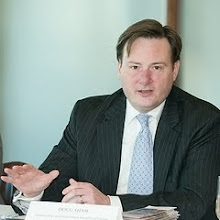
Ambassador Max Kampelman, the Democrat who became President Ronald Reagan’s arms control negotiator and who is argued to have initiated the new political momentum behind nuclear disarmament, addressed faculty and students at the Elliott School of International Affairs on November 9, 2009. Ambassador Kampelman recommended research and policy engagement by institutions of higher education to respond to the dangers posed by nuclear weapons. Observing that “political scientists ought to know how to get things done,” he contended that academic research should include questions of how policy might shape political outcomes. He suggested additional research focused on how to build consensus domestically and globally around how the world “ought” to be and the steps necessary to move in that direction. He also suggested research into how the historic experience of arms control could inform policy to respond to today’s challenges. Noting an absence of institutional and coordinative mechanisms for resolving policy uncertainty related to nuclear nonproliferation and disarmament, Ambassador Kampelman emphasized the value convening and policy engagement to bridge different perspectives on the challenge of nuclear disarmament, as well as new research on how to advance toward this increasingly important policy objective. Watch the video of Ambassador Kampelman’s public remarks here.

Friday, July 24, 2009

Thursday, March 26, 2009

The Role of Higher Education in Transforming Nuclear Weapons Policy

“The one thing we know about policy windows is that, as sure as they open, they close. If you think change is permanent, you don’t understand change…If we miss this moment, we fail.” -- Joseph Cirincione, President, The Ploughshares Fund
Ploughshares Fund President Joseph Cirincione gave a rousing and incisive presentation to an audience of fifty at the George Washington University’s Elliott School of International Affairs last night on the topic of “Barack Obama’s New Nuclear Policy.”

Highlighting the importance of what the New York Times editorial page had earlier in the day called a “Watershed Moment on Nuclear Arms,” Mr. Cirincione described the extraordinary political momentum in the United States and internationally, the activity of new and important validators (including George Shultz, Sam Nunn, Henry Kissinger, and Bill Perry) of moving toward the abolition of nuclear weapons, the agenda and team that the Obama Administration has put in place to lead a transformation of U.S. nuclear weapons policy, and the challenges this transformation will face in the window of a year or two in which the conditions remain right to make it happen. On nuclear weapons policy, he observed, “this Administration is going to be characterized as a struggle between the transformationalists and the incrementalists.”

Mr. Cirincione offered specific thoughts about the role that universities can and should play in the debate over the future of nuclear weapons policy, nonproliferation, and disarmament. First, he observed the extraordinary contribution of Stanford University, where faculty members George Shultz and Bill Perry have convened an ongoing discussion among scholars and practitioners about “Steps Toward a World Free of Nuclear Weapons” under the heading of “Reykjavik Revisited,” recalling the summit meeting between then U.S. President Ronald Reagan and Soviet Premier Mikhail Gorbachev in October 1986. Mr. Cirincione pointed out that “this whole movement was hatched at a university.”

Universities “change the paradigm; you change the way people are thinking about this,” argued Mr. Cirincione, who also encouraged universities to support scholars with breakthrough ideas and to do serious research in the area of nuclear nonproliferation and disarmament. He emphasized that universities should provide fora for public debate on nuclear weapons policy, including opposing viewpoints, and also provide venues for U.S. Government officials to connect with the public.

Finally, Mr. Cirincione included students specifically in his call to “get involved” and make political leaders care about nuclear weapons policy. He encouraged students to use the newer media – including blogs, Facebook, and twitter – to tell others what they’re thinking and “demand that your professors organize more meetings….join Global Zero…there are a hundred things that you can do about this.”

In closing, Mr. Cirincione reflected on the late President John F. Kennedy’s observation upon banning explosive testing of nuclear weapons in the atmosphere: “if I’d known it was so popular, I would have done it a long time ago.”

Wednesday, June 27, 2007

We'll always have Votkinsk

Reuters reports that on Tuesday Russia’s First Deputy Prime Minister Sergei Ivanov was quoted by Interfax in remarks in Votkinsk, Russia that his country has begun mass producing Topol-M inter-continental ballistic missiles (ICBMs): "we are now entering a new and crucial stage of reequipping all of the strategic nuclear forces and operational and tactical systems."

Verification fans will recall Votkinsk fondly as the site of the first on-site inspections for verification of negotiated limits on nuclear arms agreed to by the former Soviet Union under the 1987 Intermediate Nuclear Forces (INF) Treaty – a Treaty Russia threatened to leave in February. Although U.S. and Russian on-site inspection rights under the Treaty ended in 2001, continued observance of the Treaty’s limitation reflects both the shared interest in avoiding a resumed arms race and a hopeful model for global limitations on intermediate range missiles.

Both purposes appear to have lost their charm for President Vladimir Putin. When asked by Doug Saunders of The Globe and Mail earlier this month how Russia might respond to the proposed American deployment of a missile defense system in Europe, President Putin specifically denied that Russian missile acquisition and potential abandonment of the INF Treaty are linked to the proposal, but replied that “As far as the INF treaty is concerned, this is a broader issue and it does not relate directly to missile defence systems of the United States. The thing is that only the United States and the Russian Federation bear the burden of not developing intermediate-range missiles, and the other countries are involved in this – Israel, Pakistan, Iran, Korea, South Korea even, as far as I'm concerned. . . . If everyone complied with it, then it would be clear, but when other countries in the world are fighting to pursue such efforts, then I do not understand why the U.S. and Russia should place such restrictions on themselves. We are considering what we should do in order to ensure our security . . . a lot of countries are involved in these efforts, including our neighbours. I repeat that this does not have anything to do with the U.S. plans to deploy missile defences in Europe. We are going to find responses to both threats, though.”

While one may think President Putin protests the linkage to European missile defense a bit too much, and find his suggestion that a global treaty would be better to be cynical, the U.S. effort to multilateralize the INF Treaty following the fall of the former Soviet Union suggests the sort of expansion of verification provisions developed during the Cold War that could contribute to greater global confidence in a strengthened nonproliferation regime.

Unlikely as it seems today, and even as Votkinsk becomes the birthplace of a new generation of Russian ICBMs, we should keep in mind that if we succeed in realizing President Reagan’s vision of a world free of nuclear weapons – given new life in January in the Wall Street Journal by George Schultz, William Perry, Henry Kissinger, and Sam Nunn – Votkinsk (along with Magna, Utah) will be where on-site inspection for nuclear disarmament was first achieved and this counterintuitive achievement should remind us that positive change is possible through careful and innovative diplomacy.

Thursday, June 21, 2007

Trust, but verify with the Washington Times

Here’s an excerpt from Doug's letter to the editor in today’s Washington Times:

“nuclear weaponry and strategic deterrence no longer receive the serious national deliberation they should. Mr. Gaffney's call for a national debate is doubly important because he is wrong about everything else.”

Click here for the full letter (it’s the second one down, after the sexeducrats).